
A 16-Day South Pacific Cruise: Stories and Lessons of Purpose, Passion, and Life


She booked the South Pacific cruise for the snorkeling and the scenery. She came home with something far more valuable — the stories of the people who make life at sea possible.
Purpose versus passion. Passion versus purpose. Those words did not entice me to cruise for 16 days with friends through the South Pacific, but they do explain an unexpected discovery I made on board.
What drew me was the adventure: snorkeling off Moorea Island’s reefs, seeing the WWII airstrip on Mystery Island, visiting American Samoa’s National Park, the only one south of the equator, and disembarking in Sydney to climb the bridge and attend a concert at its famous opera house. Of course, I also looked forward to wining and dining every night with friends, lounging around the ship’s saltwater pool, and getting a double-shot Americano from the barista after a morning workout.
What I didn’t expect was a Downton Abbey vibe on the boat. Instead of upstairs and downstairs actors, a below-deck and above-deck persona revealed itself, and it was worth exploring. What personal stories made waiters, maids, cooks, deckhands, and bartenders work ten hours a day for six months before taking a break, only to do it all over again? And what made passengers willingly spend 180 days on around-the-world trips when just 16 days of rocking in my bunk at night was enough for me?

Life below deck — what I found surprised me
As I began interviewing crew members, I discovered purpose first. Mary Jane from the Philippines had been rotating between breakfast and dinner shifts, while always serving lunch, for more than eight years. “I earn a good salary, eat good food, and travel the world for free,” she said. “Getting up at six isn’t always fun when I also have a late dinner shift at one of the specialty restaurants. But we get a break in the middle of the day to do laundry and take a snooze. I dress up as much as the passengers do for dinner, so I always have clothes to wash.” She laughed. “I’m also married to one of the chefs. We met on this boat and live together below deck. It gives new meaning to the teamwork I feel all staff share with each other.”
Mary Jane and her husband also have a two-year-old son waiting at home. “He’s in good hands with extended family, and we miss him greatly,” she said. “But our goal is to earn enough working on the ship to start a small business back home, maybe a small coffee shop. We’ll make it happen eventually.”
Why do crew members choose life at sea?
Romanian Geania’s purpose for serving drinks poolside was simpler: to get away from home. “When I graduated from the University of Bucharest, I returned to a life I no longer wanted,” she told me. “I had interned in the U.S. for a summer and discovered a world I could explore by cruising. I was rejected when I first applied to another cruise line. My public relations degree was useless. Then I went to a specialized school that trained crew members like me, and I finally had the right qualifications.”
The long days can be tiring, she said, but she relishes every port of call. “I’m young. Why not make the boat my home? Besides, I write a page a night in my journal because I write to feed my soul, not my ego.” She smiled, knowing I’d include that. “That’s Romanian wisdom.”

Ferdinand wore his passion on his sleeve when I interviewed him about his maître d’ position. He was dressed to the nines even in the middle of the day as he set up with staff for the evening meal. Born in the slums of Mumbai, he had big dreams from the start. “I had to take care of my parents, and working in hospitality was a path I could take. Little did I know I would develop such passion for the job. But I am not done yet. I started as a dishwasher, the lowest job on a ship. I worked my way up to waiter, and now I am in charge of the Grand Lounge dining experience. Someday I want to run the entire restaurant operation aboard the ship. I have a wife back in India and two grown boys. I have the best of both worlds: at sea and at home.”
Cruise ship life attracts dreamers from every corner of the world: people like Mary Jane, Geania, and Ferdinand, each with a story that started somewhere else and found its next chapter at sea.
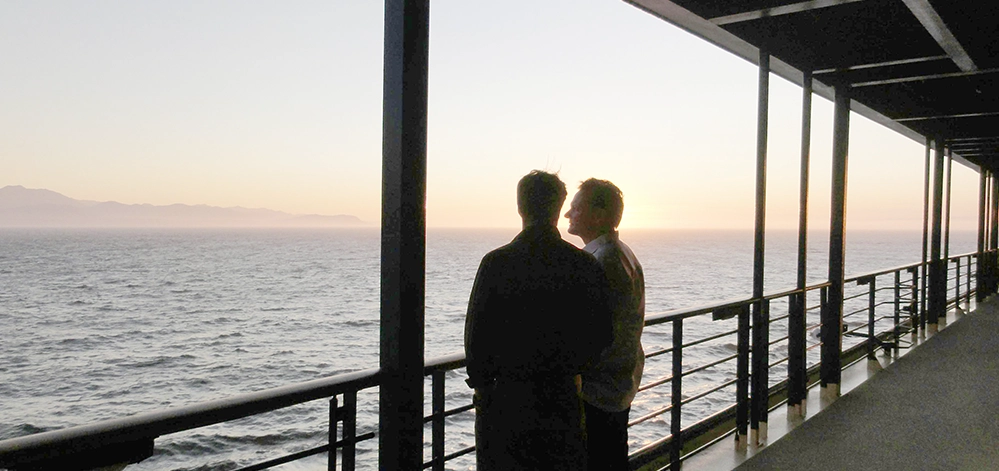
Can you actually live permanently on a cruise ship?
Such passion and purpose extend above deck as well. Chris, a retired teacher from Long Beach, has completed nine world cruises, and living on a cruise ship is now her permanent retirement solution. She knows Mary Jane, Geania, and Ferdinand well, and they serve her graciously.
Chris had lived a frugal life alongside her late husband, investing wisely for the future. After his passing, she decided it was time to get on with living. While researching retirement communities with her son, she met a world traveler while volunteering at a local library. That chance encounter changed everything. She took her first cruise and never looked back. When the cruise line offered her a long-term living arrangement, she found her permanent home.
“I now have to re-up for each world cruise after spending a month on shore with my son,” she told me. “But at 86, what’s not to like? My bed is made, and my room is cleaned daily. I can eat out at every meal or order room service. I don’t do laundry. I can avoid people with negative vibes. The ship’s doctor meets my basic medical needs. I meet fascinating people: the couple who produced musicals in London’s West End, the Colombian ambassador to the U.S., and a Mormon executive who rescued troubled banks in South Korea. On my last birthday, an opera singer serenaded me. When people learn this ship is my home, they seek me out to talk. I’m never really alone unless I want to be.”

Her son is approaching retirement, and the two are planning a cruise together. Some chapters, it turns out, are written across generations.
For anyone considering living on a cruise ship full-time, Medicare coverage is a critical factor. Original Medicare generally covers you only when the ship is in a U.S. port or within six hours of departure or arrival. Beyond that, coverage drops significantly. A robust Medigap supplement plan or dedicated travel insurance is essential — not optional — for anyone living abroad long term.
Purpose, passion, and the people who made it real
I didn’t get to talk to the crew painting the ship’s hull while we were on shore, nor did I speak with the captain who kept a tight ship. (Forgive the pun.) But exploring cruise ship life through the real people living it, their own Downton Abbey series, made my snorkeling adventures even more satisfying.
Purpose versus passion. Passion versus purpose. Does a difference really exist, whether living below deck or above? Perhaps not. It’s just an alternative lens for viewing all of life’s adventures, across the seven seas and among the people who make them happen.
A South Pacific cruise can be many things — adventure, comfort, escape. But for those willing to look past the deck chairs, it’s also a window into how purpose and passion show up in lives very different from our own.
Bon voyage, Downton Abbey.
Frequently asked questions about cruising
Does Medicare cover you on a South Pacific cruise?
Original Medicare covers medical care on a cruise ship only when the ship is in a U.S. port or within six hours of departure or arrival. Beyond that, coverage is very limited. Travelers should consider a Medigap supplement plan or travel insurance before departing. Some Medicare Advantage plans offer emergency coverage for foreign travel — check your specific plan before you go.
How much does it cost to live on a cruise ship full-time?
Costs vary widely depending on the cruise line, cabin type, and length of stay. Long-term arrangements can range from roughly $2,000 to $10,000 or more per month and often include meals, housekeeping, and basic medical care. When all costs are factored in, some find them comparable to or less expensive than a quality retirement community.
What cruise lines offer long-term living arrangements?
Several luxury cruise lines offer extended voyages or residential programs. World cruises typically last 100 to 180 days. Some lines have formal programs for full-time residents. Research each line and speak directly with its sales team about long-term options.
Is a South Pacific cruise a good trip for adults 50+?
Absolutely. A South Pacific cruise offers adventure, comfort, and discovery in equal measure. Destinations such as Moorea, Mystery Island, American Samoa, and Sydney appeal to active travelers, while on-board amenities, including fine dining, spa services, and enrichment programs, make it equally rewarding for those who prefer a slower pace.
You just read one of our favorite stories. There’s more where this came from — subscribe, and we’ll bring them to you every Tuesday.