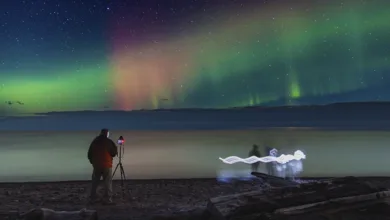
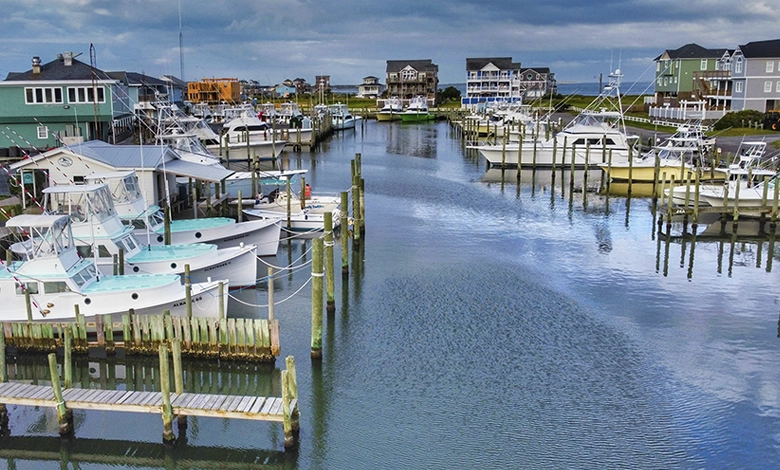
You already knew the Outer Banks were beautiful. Here’s why they’re even better in your second act.
Outer Banks of North Carolina spark the imagination. Until you visit, it’s hard to explain. This thin ribbon of barrier islands stretches about 200 miles along the Atlantic coast, from the Virginia border to Cape Lookout. Wild and welcoming, mysterious and alive — for those of us in our second act, it offers more than scenery. It offers perspective.
Here’s a guide to Outer Banks travel that goes beyond the postcard — from wine and wild horses to aviation history and hopping a ferry into the past.
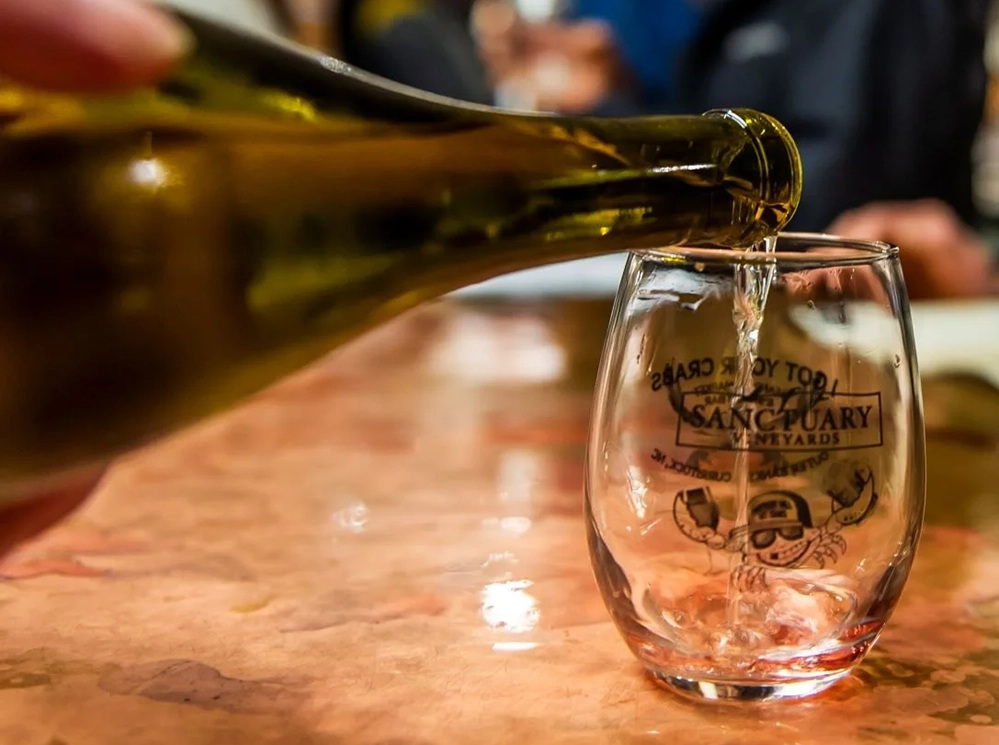

Start with a glass at Sanctuary Vineyards
Begin your adventure with a visit to Sanctuary Vineyards in Jarvisburg, on the mainland at the northern end of the Banks. This was our third visit here, and we were happy to see it thriving. The family has farmed this coastal land for generations. Their estate comprises vineyards, farmland, and wild areas. The coastal climate, tempered by Atlantic breezes and intense summer sun, ripens grapes like Syrah, Viognier, Tempranillo, and the classic Muscadine. Wild Pony White is one of their bestsellers and carries a special local connection. Linger over one of their three tasting menus and settle in.
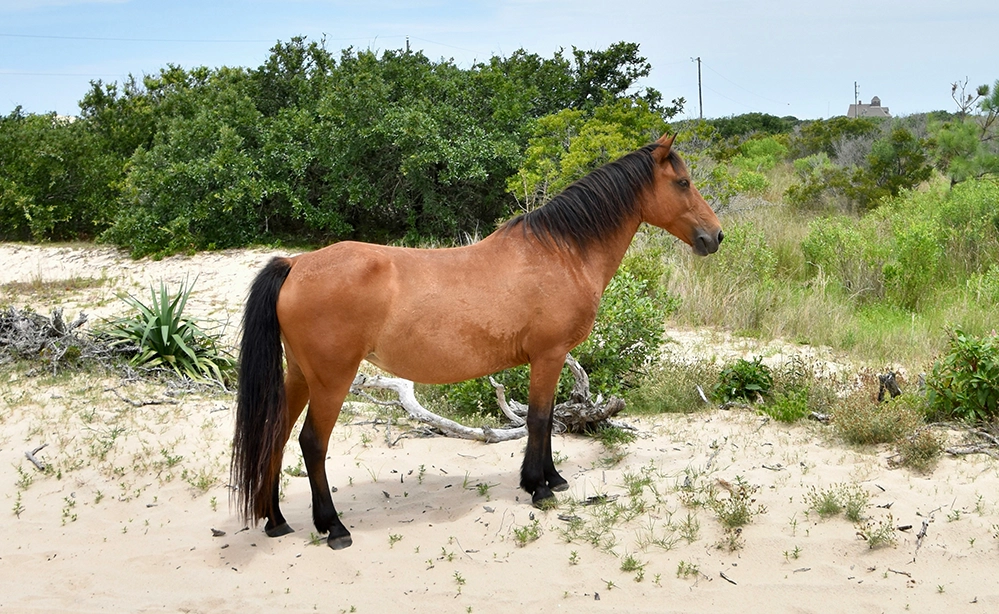
Visit the famous wild horses of Corolla
If you started at Sanctuary Vineyards, you’ve already supported this herd — every bottle of Wild Pony White contributes to their conservation. When you visit the Outer Banks, these horses are one of the most iconic sights. Believed to descend from the colonial era, they roam the beaches and maritime forests near Corolla in Currituck County year-round. The herd is managed through monitoring, fertility control, and other programs.
Note: Keep at least 50 feet distance, don’t feed or approach them, and use binoculars or long lenses for photos.
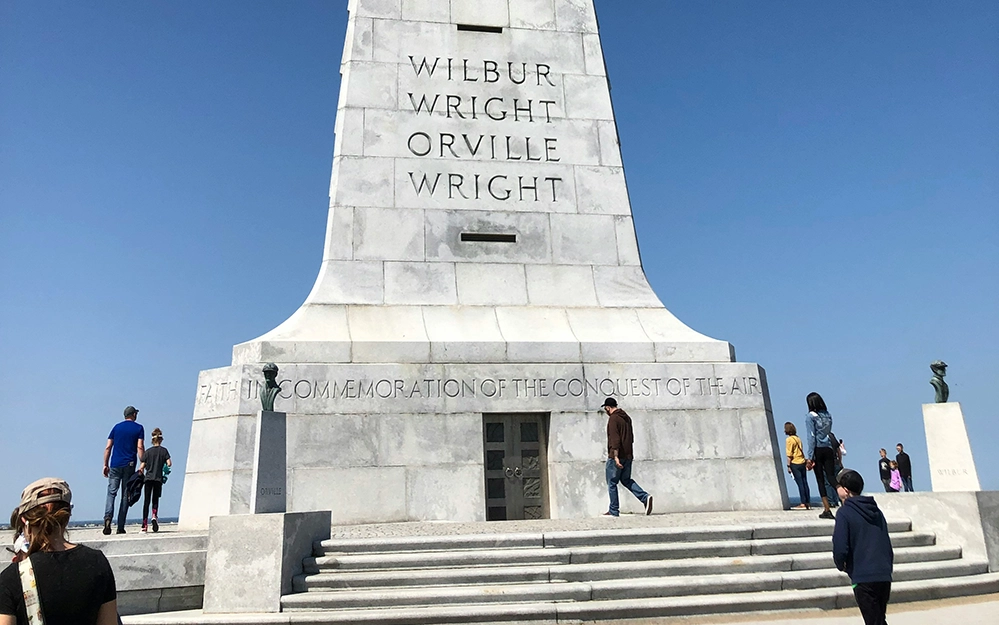
See where the Wright Brothers changed everything
From the vineyard or Corolla, it’s a short drive to Kill Devil Hills, where we stayed, and the family-friendly Wright Brothers National Memorial. On the ground where Orville and Wilbur Wright made the first successful powered flight in 1903, you’ll get a sense of the brothers’ courage and inventiveness. The monument stands on the hill where they used to practice gliding, and the visitor center highlights their life story. Talk with the knowledgeable and welcoming rangers.
Note: For 50+ visitors, the memorial park is spread out, so if you have trouble walking, consider visiting just the center, where you’ll find a rich experience.
We love mini golf and played a round at the popular Lost Treasure Golf, located just north of the Wright Brothers Memorial. Visit both for a perfect day of fun. For serious golfers, you’ll find about 10 full-size golf courses in the area.
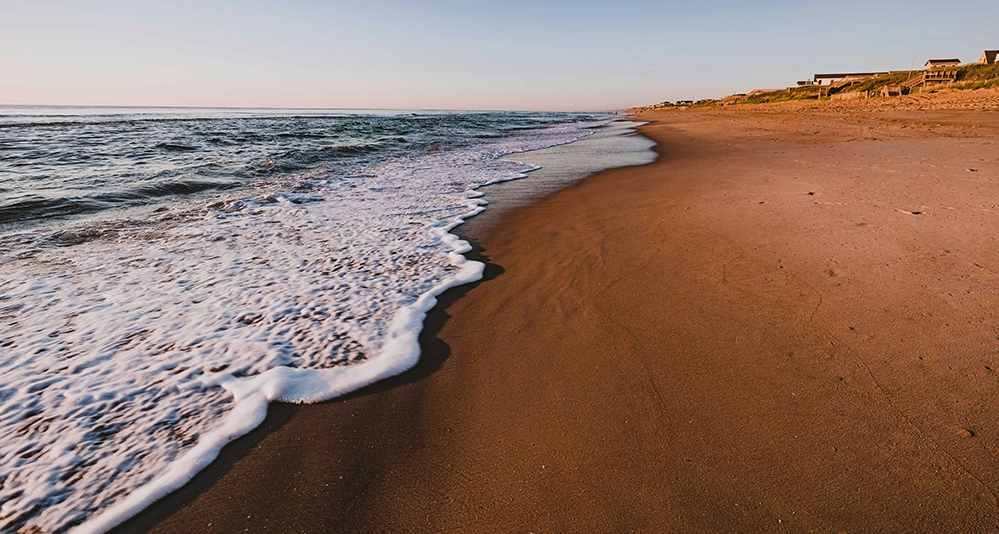
Visit Cape Hatteras National Seashore
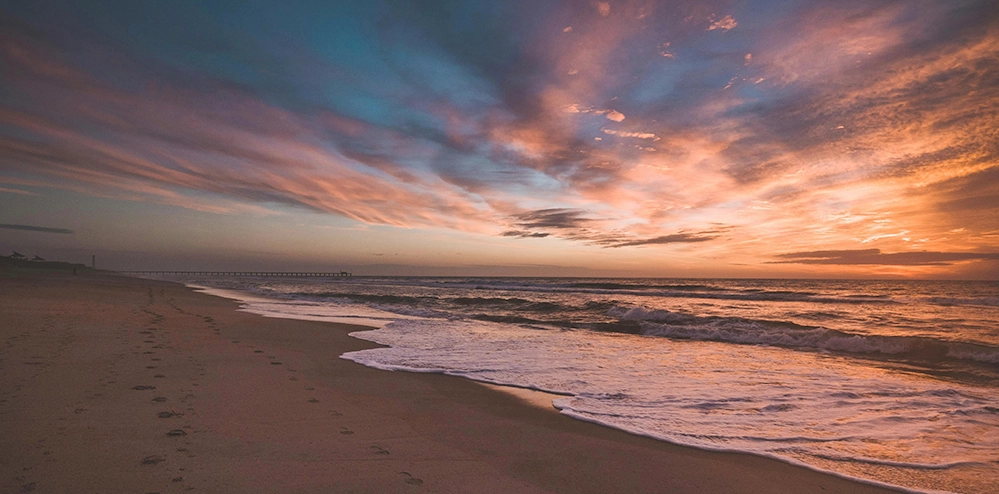
Cape Hatteras National Seashore stretches roughly 70 miles, protecting untouched beaches, marshes, and maritime forests. Walk the shore at off-peak hours, and you may share it only with shorebirds. Even if the lighthouses are closed, as they were during our visit, sunrises here are spectacular because the beach faces east. The west side, with its steady winds, is ideal for parasailing and kiteboarding. A visit here will reset your nervous system — pure Outer Banks travel at its slowest pace.

Hop the ferry to Ocracoke Island
Don’t skip it — take the ferry. The free ferry from Hatteras to Ocracoke Island is one of the great pleasures of the Outer Banks. Jump on the ferry for the 40-minute crossing to a small village that takes you back in time. You’ll see a harbor full of fishing boats, a lighthouse dating to 1823, and a pace of life that reminds you what living without urgency feels like. Have lunch, wander the village, and breathe.
One important note: Ferries are first-come, first-served in both directions. If you miss the last boat back, you’ll be staying on Ocracoke overnight.
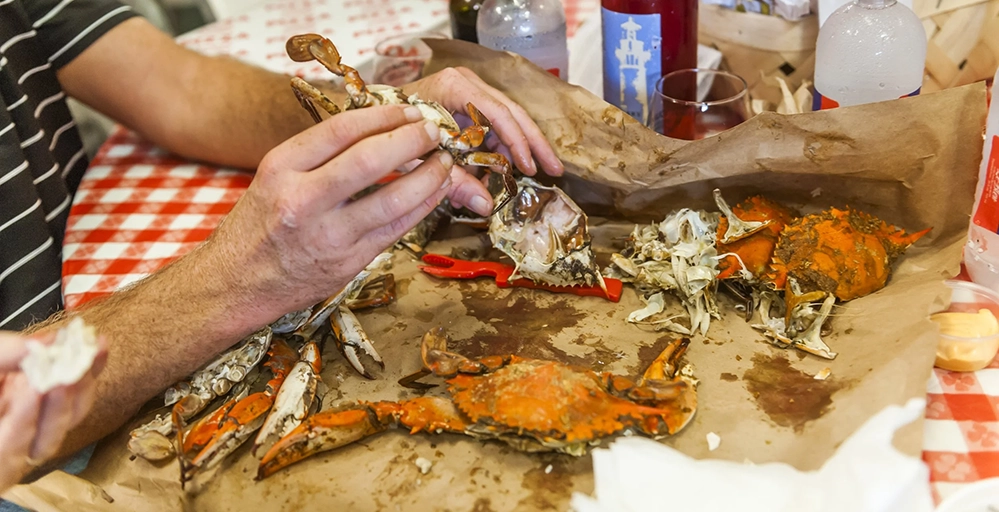
Where to eat and drink in the Outer Banks
The Outer Banks food and drink scene is better than you might expect. Here are a few favorites.
Carawan Seafood Company is the real deal — fresh, local seafood straight from the source. This seafood market offers more than fish and shellfish. Try the delicious homemade hushpuppies, pick up some fresh produce and a bottle of Sanctuary wine, and even some gifts. And if you’re visiting in October, catch their annual CrabDaddy Seafood & Wine Festival.
TRIO Restaurant & Market is our favorite wine bar and restaurant. It offers an impressive selection of wine and beer, along with a deli, a bar, and a restaurant. It’s a one-stop shop for the makings of a fabulous picnic or a special dinner. I bet you’ll visit more than once.
Mama Kwan’s offers a laid-back, Caribbean-influenced energy and delicious food in a fun, casual setting. Locals and visitors love it here.
For craft beer lovers, Outer Banks Brewing Station was the first wind-powered brewery in the United States, but it lost its wind turbine in a recent storm. Beyond beer, they serve wine, cocktails, and food. Swells’a Brewing is a newer addition, with a welcoming taproom and an upstairs patio. It’s also family-friendly. Both are in Kill Devil Hills.
End an evening with a cocktail at The Bonzer Shack, a welcoming bar with a beachy feel. The vibe is low-key, and the food is surprisingly good. You’ll find live music here on the weekends.
Medical care and peace of mind
Outer Banks Health Hospital, ten minutes south of Kill Devil Hills in Nags Head, provides reliable emergency care year-round. From personal experience, I felt cared for.
Note: Beware of waiting times during the busy summer months when the population swells from 35,000 to about 250,000.
Why the Outer Banks gets under your skin
The Outer Banks aren’t flashy, but that’s a gift. Whether you fish, try water sports, savor a glass of wine, or simply stand at the Atlantic’s edge, this place draws you in. Traveling to the Outer Banks doesn’t just take you somewhere — it brings you back to yourself. And isn’t that the best reason to travel?
What you want to know about the Outer Banks
When is the best time to visit the Outer Banks?
Spring and fall are the sweet spots — mild weather, smaller crowds, and lower lodging rates. Summer brings warm beach weather but also peak crowds, as the local population swells from 35,000 to about 250,000.
How long should I spend on the Outer Banks?
Four to seven days lets you experience the highlights without rushing — including the vineyards on the mainland, the Wright Brothers Memorial, Cape Hatteras National Seashore, and a day trip by ferry to Ocracoke Island.
Is the Outer Banks a good destination for travelers over 50?
Yes. The pace is unhurried, the scenery is restorative, and the activities range from quiet beach walks and wine tastings to visits to historic sites and water sports. Many destinations are accessible, and reliable medical care is available year-round at Outer Banks Health Hospital.
Do you need a car to visit the Outer Banks?
A car is essential. The barrier islands stretch about 200 miles, and most attractions — including the Wright Brothers Memorial, Sanctuary Vineyards, Cape Hatteras, and the Hatteras-Ocracoke ferry — are spread across the region. There is no public transit.
You just read one of our favorite stories. There’s more where this came from — subscribe, and we’ll bring them to you every Tuesday.