Tulip Mania in Full Bloom: 7 Million Tulips at Keukenhof
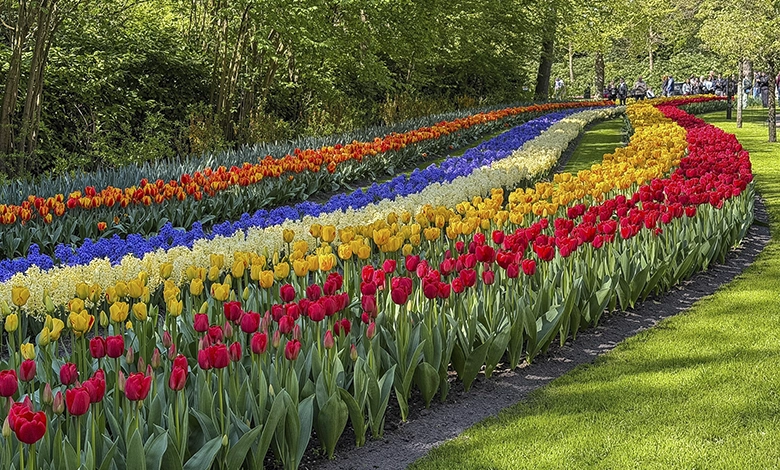
A kaleidoscope of colors had everyone on the bus grabbing their cameras. Our tour group had finally made it to the Netherlands’ famous tulip fields. Crimson and apricot swaths stretched to the horizon.
Tulip Mania: The world’s first economic bubble
Tulip mania actually began in the late 1500s, after tulips arrived in the Netherlands from the Ottoman Empire. The Dutch learned to cultivate the bulbs, which were considered luxury items and status symbols. As tulips grew in popularity, people paid extra for special varieties.
In the 1600s, tulips were considered a good investment. Bulbs were traded on the Amsterdam stock exchange. People sold their homes to buy specific bulbs. Prices peaked at ten times the average salary. As the supply of tulip bulbs increased, prices eventually fell. Then the 17th-century economic bubble burst — the first in the world.
From bulb to bloom: How tulips are grown
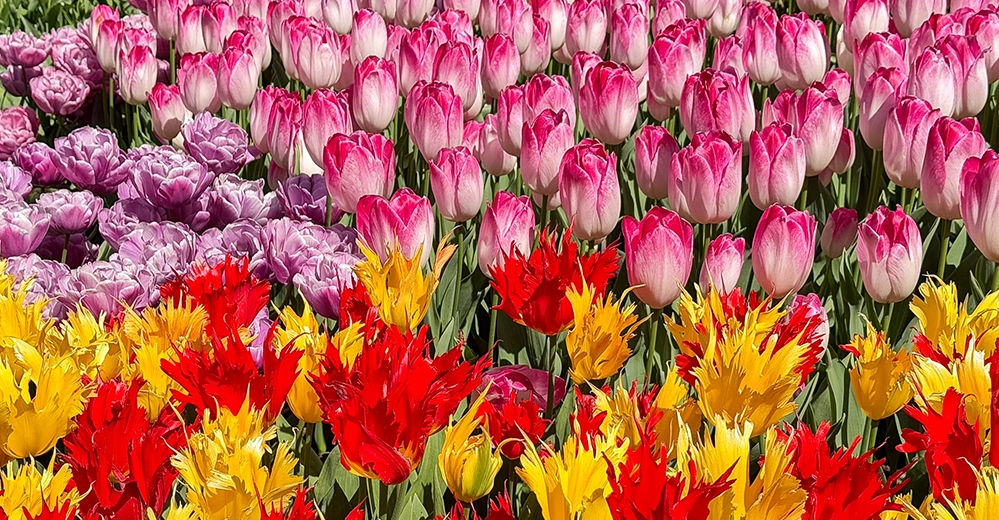
Tulips grow somewhat like onions. The bulb splits into multiple smaller bulbs, which growers harvest and sell. To strengthen the bulb, growers allow row after row of tulips to bloom, then cut off the blooms. During my visit, we saw several fields with green stalks, colorful petals lying on the ground.
The blooms in the tulip fields may have begun as seeds 15 years earlier. To create a new variety, growers start by hybridizing seeds. After several growing cycles — sometimes as long as seven years — commercial viability is evaluated. If the new hybrid proves successful, production scales up over time to meet demand.
Not surprisingly, those endless rows of a single variety are big business for bulb companies. Beyond tulips, you’ll also see hyacinths, daffodils, and other bulbs. According to Eurostat, bulb exports from the Netherlands totaled 82 million euros in 2024.

Inside Annemieke’s Pluktuin: A pick-your-own tulip farm
But bulb growers aren’t the only business here. Our tour took us to Annemieke’s Pluktuin, a flower-picking farm. Annemieke and her husband grow cut blooms for markets and flower auction houses as an alternative to the bulb business. The farm is also a U-pick operation where locals (and us!) can wander into the fields and come home with a bundle of tulips.
Instead of planting in single-color blocks, Annemieke mixes 250 varieties. The results look like paintings by the Dutch masters. Standing among the tulips and picking your own bouquet was a dream come true. Smiles on faces, young and old, said it all.
Inside Keukenhof: 7 million bulbs, 200 acres
Then we were off to Keukenhof itself, the granddaddy of tulip gardens. Tulip season is short, typically running from late March through mid-May. Around 1.4 million people come to see the magnificent display each year.
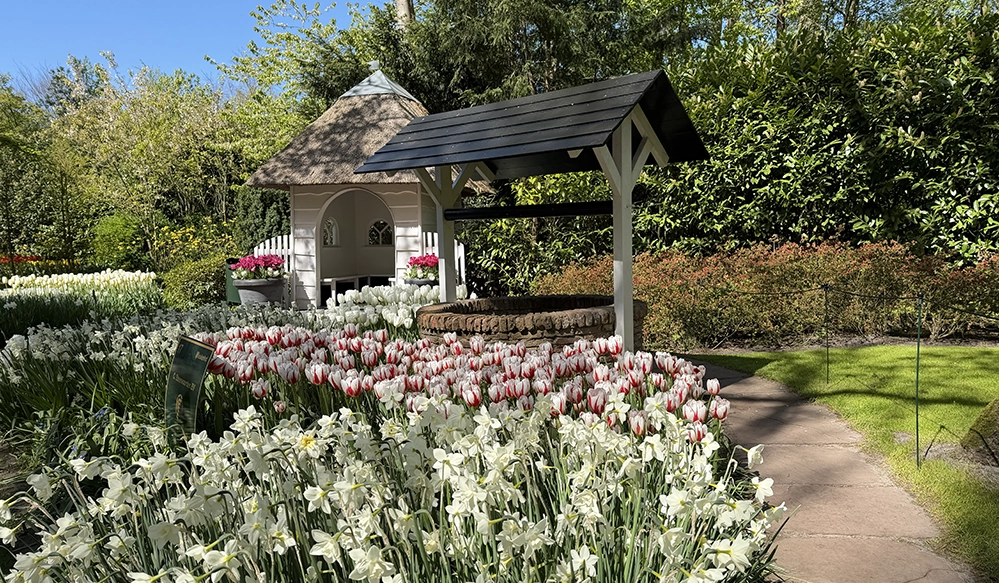
Keukenhof employs 40 gardeners year-round and an additional 1,000 during tulip season. Small growers showcase their tulips throughout the gardens, and businesses’ names often appear next to sponsored flower beds.
We spent three hours strolling through 200 acres of daffodils, hyacinths, and tulips in every shape and shade. The gardens are a riot of color, and it’s no wonder Keukenhof tops so many bucket lists.
Beyond the gardens, several pavilions on the grounds host shows featuring growers of cut flowers and potted plants. During my visit, the Oranje Nassau pavilion showcased a menagerie of Gerbera daisies, Lisianthus, and Alstroemeria.
You’ll find a spinning windmill tucked away on one side of the park; climb it to see the flower fields beyond. You can also take a boat ride through the canals, surrounded by tulip fields, for an additional fee.

How to visit Keukenhof — and bring tulips home
Keukenhof requires a little planning because the gardens are about a 30-minute drive from Amsterdam. My riverboat tour included transportation, and we docked in Haarlem. If you’re not cruising, buses and tours depart from Amsterdam. The drive is not long and is actually quite pretty.
We brought a picnic lunch to Keukenhof, where picnic tables and benches offer a leisurely break. The sheer volume of color can be overwhelming, so we ducked into a pavilion for a coffee break as well. Three to five hours is plenty of time to see the grounds, but try to avoid Fridays through Sundays, when crowds are largest. If you’re staying in Amsterdam, you can continue the tulip experience at the Tulip Museum on one of the canals near the Anne Frank House and at Bloemenmarkt, the floating flower market. The market has some fun souvenirs.
Bulbs are available for sale at both locations, but remember to check agricultural restrictions before flying back to the US. Keukenhof also sells bulbs and ships them to the US in time for fall planting.
Plant your lovely bulbs in your yard when you get home, and you’ll have a reminder of the Netherlands each spring when they bloom. If you’re now dreaming of seeing this wonder for yourself, Keukenhof opens in March. Start planning your trip now to experience it next season.
Frequently asked questions about visiting the Netherlands and Tulip Mania
When is tulip season in the Netherlands?
Tulip season is short, typically from late March through mid-May, with peak bloom in April.
How do I visit Keukenhof?
Keukenhof is about a 30-minute drive from Amsterdam. Buses and tours depart from the city and several river cruises also include transportation to the gardens.
Can I bring tulip bulbs back to the US?
Yes, but check agricultural restrictions before flying home. Keukenhof sells bulbs and ships them to the US in time for fall planting.
What is tulip mania?
Tulip mania was a 17th-century buying frenzy in the Netherlands when single tulip bulbs became so valuable that they traded like stocks on the Amsterdam exchange. Prices peaked at ten times the average salary, and people sold their homes to buy them. When the market crashed in 1637, fortunes vanished overnight — making it the world’s first recorded economic bubble.
Where else can I see tulips in Amsterdam?
Beyond Keukenhof, visit the Tulip Museum and Bloemenmarkt, Amsterdam’s floating flower market. The Tulip Museum sits on a canal near the Anne Frank House.
You just read one of our favorite stories. There’s more where this came from — subscribe, and we’ll bring them to you every Tuesday.