

Caring for Aging Parents and Loved Ones | The series
By Paul Wilczynski, Publisher, TheSeniorTechie.com
Part 3 of Caring for Aging Parents and Loved Ones, an eight-week series.
Researchers named 14 things that raise the odds. Most are ordinary habits — and one is a hearing test you keep putting off.
Have you ever walked into a room and stood there for a second, wondering why you came in? Everyone does that. It’s not the same as the fear that sits underneath it: the quiet worry that this time it means something more.
That worry is common, and it’s rarely talked about honestly. Most of what you hear about memory loss is either terrifying headlines or vague reassurance. Neither one tells you what to do this week.
Here’s the good news buried in the research: dementia isn’t a coin flip you have no control over. A major 2024 Lancet Commission report found that about 45% of dementia cases worldwide trace back to 14 modifiable dementia risk factors — things like hearing loss, high LDL cholesterol, physical inactivity, and social isolation. That’s not a cure. It’s a set of levers you can actually pull.
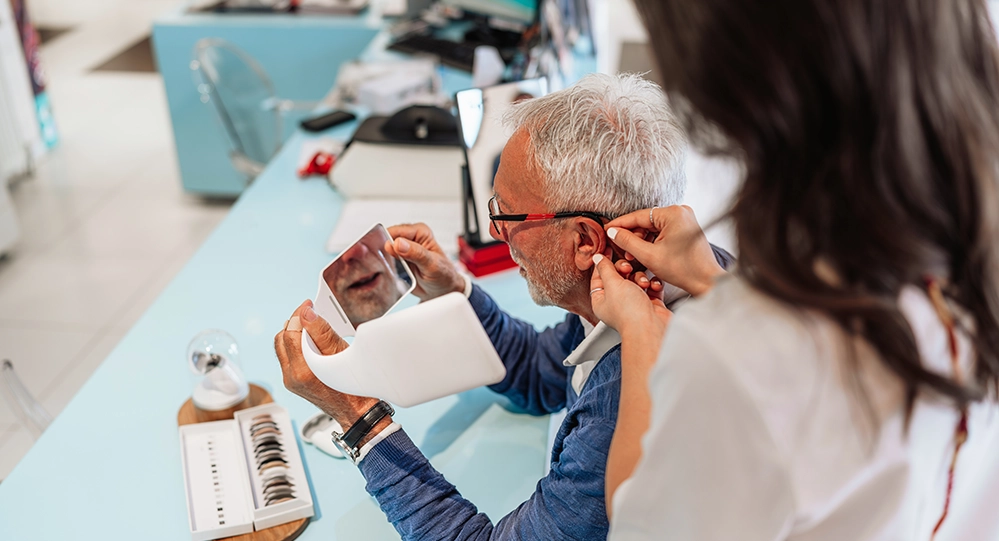
The 14 things that raise your dementia risk
The Lancet Commission’s list reads less like a mystery and more like a checklist of ordinary habits. Hearing loss made the list. So did high cholesterol, added in the most recent update alongside untreated vision loss.
That detail surprises most people. You’d expect the list to be dominated by genetics or age alone. Instead, it’s full of things a primary care visit or a pair of glasses can address directly.
The 14 dementia risk factors span your whole life, not just your sixties and seventies:
- Less education in early life
- Hearing loss left untreated
- High LDL cholesterol
- Depression
- Traumatic brain injury
- Physical inactivity
- Diabetes
- Smoking
- High blood pressure
- Obesity
- Excessive alcohol use
- Social isolation
- Air pollution
- Untreated vision loss
Getting your hearing checked isn’t a small errand you keep putting off. It’s one of the more direct paths to protecting your brain over the next twenty years.

Does brain training actually work?
You’ve seen the apps. Lumosity, BrainHQ, Peak, Elevate, all promising sharper memory if you play their games for ten minutes a day. For years, the honest answer from researchers was “we don’t really know.”
That changed this year. A federally funded study following 2,802 people found something specific: adults who completed eight to ten sessions of cognitive speed training, plus at least one booster session, were about 25% less likely to be diagnosed with dementia over the following two decades. This is the ACTIVE trial, and it’s the strongest evidence yet that a particular kind of training, focused on processing speed rather than general memory games, produces a measurable difference decades later.
Here’s the catch, and it matters: memory training and reasoning training in the same study showed no such benefit. Speed-of-processing training did. If you’re going to spend money on a brain training app, look specifically for one built around processing speed exercises — BrainHQ, built on the Posit Science research behind this trial, is the most direct match — rather than a generic puzzle collection.
Do you already do crossword puzzles or Wordle every morning? Keep doing them if you enjoy them. Just don’t mistake enjoyment for medical protection. The evidence for that specific benefit is much narrower than the marketing suggests.
How can everyday tech support a failing memory?
Once memory starts slipping, whether from normal aging or something more serious, the goal shifts from prevention to support. This is where consumer technology has quietly gotten useful.
Smart speakers can hold recurring reminders for medications, appointments, and mealtimes without anyone having to write a note that gets lost. Ask Alexa or Google Assistant to repeat a daily reminder, and it doesn’t get tired of repeating itself.
GPS pendants and smartwatches solve a specific, frightening problem: wandering. Nearly six in ten people with dementia will wander at some point, and a location device worn as a watch or clipped to clothing means a caregiver can find someone within minutes instead of hours.
Door sensors and smart-home systems add a second layer. Some setups now detect when someone gets out of bed at night and use soft lighting to guide them safely to the bathroom, only alerting a caregiver if an exterior door opens. That’s a real product category now, not a research curiosity.
Do AI companions work, or are they a gimmick?
This is the part where skepticism is fair. A robot that talks to your parent sounds like a gimmick until you look at what it’s measuring.
ElliQ, an AI companion device rolled out by New York State’s Office for the Aging, showed a 95% reduction in loneliness among the older adults using it in that program. It initiates conversation on its own, remembers what you told it yesterday, suggests activities, and reminds you to take medication or drink water. Newer versions use generative AI to do things like write a poem with you or walk through trivia, activities that double as light cognitive engagement.
Should you buy one for a parent who’s isolated and starting to slip? It’s worth trying if the underlying issue is loneliness and mild memory support, less so if someone needs medical-grade monitoring. Match the tool to the actual problem.
When should you call a doctor about memory loss?
Technology and lifestyle changes matter, but they’re not a substitute for medical evaluation. If you’re noticing repeated memory loss that interferes with daily tasks — paying bills incorrectly, getting lost on familiar routes, forgetting recent conversations entirely — that’s the point to call a doctor rather than wait and see. If you’re caring for aging parents, you may be the one who notices before they do.
The National Institute on Aging offers a free, comprehensive guide called “Caring for a Person with Alzheimer’s Disease” that walks through what a diagnosis actually means day to day. It’s worth ordering before you need it, not after.
⇒Read next: Early Signs of Dementia: What to Watch For, and What You Can Do

What should a week look like?
Nobody needs a rigid regimen to protect their brain. Small, consistent habits do more than occasional heroic efforts. If you’re caring for aging parents or thinking about your own next twenty years, a workable weekly rhythm might include:
- Thirty minutes of brisk walking, five days a week
- One social visit or phone call with a friend, not just family
- A Mediterranean-style meal swap two or three times a week
- Ten minutes of processing-speed brain training, if you choose to use an app
- A consistent sleep schedule, even on weekends
- One hearing test, if you haven’t had one in the last two years
That last one is the single most overlooked item on the modifiable risk list, and it’s usually covered by insurance. None of this requires special equipment. Most of it requires deciding to do it, which is the hard part for everyone, not just older adults.
Common questions about memory loss and dementia risk
What is the difference between normal forgetfulness and early dementia?
Normal forgetfulness usually involves misplacing items or forgetting a name temporarily, then remembering it later. Early dementia typically involves memory loss that disrupts daily functioning, like forgetting how to complete familiar tasks or getting lost in well-known places, and it tends to worsen rather than stay steady.
What percentage of dementia is preventable?
About 45%, according to the 2024 Lancet Commission report, which identified 14 modifiable risk factors accounting for that share of cases worldwide. The remaining risk relates to genetics, age, and factors not yet understood.
Is hearing loss linked to dementia?
Untreated hearing loss is one of the 14 factors named by the Lancet Commission, and it is among the most addressable. A hearing test is inexpensive, usually covered by insurance, and treating a loss reduces the social isolation that compounds the risk.
Does diet change dementia risk?
Diet plays a measurable role, particularly Mediterranean-style eating patterns rich in vegetables, fish, and olive oil, which research groups including the Mayo Clinic Alzheimer’s Disease Research Center associate with better long-term cognitive outcomes.
Are GPS trackers for dementia patients covered by insurance?
Coverage varies widely by device and insurer. Medicare Advantage plans sometimes include coverage for approved medical alert or monitoring devices, but standard Medicare typically does not, so check with the specific plan before purchasing.
How often should someone with memory concerns see a doctor?
Anyone noticing memory changes that affect daily life should see a doctor promptly for an initial evaluation, and then follow the monitoring schedule that physician recommends, often every three to six months once a cognitive concern is identified.
Next week: daily living and independence.
You just read one of our favorite stories. There’s more where this came from — subscribe, and we’ll bring them to you every Tuesday.