
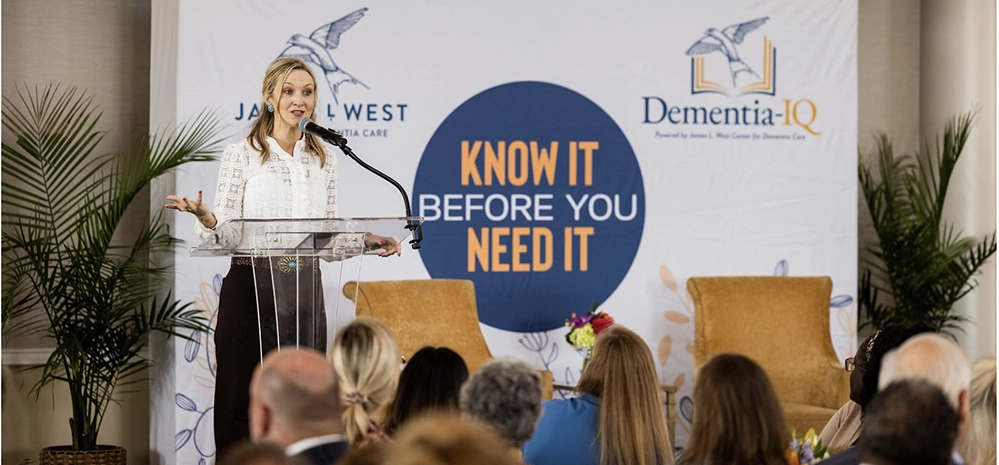
None of us wants to think about dementia — until a parent repeats the same question for the third time or can’t find the car in a familiar parking lot. That quiet worry is what filled a room at River Crest Country Club on April 23, 2026, when a full house of 320 gathered for “Know It Before You Need It,” hosted by the James L. West Center for Dementia Care, a national leader in dementia care and education.
The message families most needed to hear was simple: you don’t have to face dementia alone, and understanding what to watch for and what to do early can change the entire experience of the disease.
Normal aging or a warning sign? Knowing the difference
One of the afternoon’s most practical goals was helping families distinguish ordinary, age-related forgetfulness from the early signs of dementia that need more attention — misplacing your keys is normal. Forgetting what the keys are for is not.
Fort Worth Mayor Mattie Parker shared her family’s roller coaster ride through her father’s dementia. She described the early changes they noticed and the frustration of “not knowing what they don’t know.”
She credited much of their progress to Dr. Janice Knebl, Medical Director at UNT Health Science Center at Fort Worth and the James L. West Center. With the right education and guidance, she said, they saw real improvements in her father’s circumstances, his well-being, and his quality of life.
Event co-chair Andy Taft opened the program by sharing his family’s experience with what he called “the long good-bye,” the disease’s slow, progressive course, and how the Center welcomed his family “with open arms” when they felt most alone. That distinction between what is typical and what signals concern empowers families to seek help early rather than wait for a crisis.
Dementia changes the brain, but it doesn’t erase the person
An educational session led by Jaime Cobb Tinsley, Vice President of Family and Professional Education, and Hollie Lowe, Director of Education and Family Support Services, at James L. West used role-play to show how everyday communication can either deepen frustration or build connection.
“Dementia can change the brain, but it does not erase the person,” Lowe said. “A person with dementia can feel joy, love, and most importantly, they can feel connections.” She added that connection “is not dependent on a perfect memory. It lives in presence, tone, and personal relationships.”
Can you lower your risk? Habits that protect brain health
Tinsley addressed the question on every family’s mind: what can we do now to reduce our risk? While there is no guaranteed way to prevent the disease, she highlighted everyday lifestyle choices that support brain health and may help reduce dementia risk:
- Staying physically active
- Protecting your senses, especially hearing and vision
- Managing stress
- Keeping your mind engaged through lifelong learning
These are the same habits that strengthen the aging brain at any age, and a few simple daily routines can make a real difference in how sharp you stay.

Why the early conversation matters
Another theme ran through the day: planning ahead. When families postpone difficult conversations, they often end up making decisions in the middle of a crisis. Talking early reduces confusion, protects dignity, and creates a clearer path for care. It won’t eliminate the impact of dementia, but it can reduce much of the chaos that follows when a family is caught off guard.
Knowing where to turn is part of that plan. Medicare’s GUIDE program now helps dementia families coordinate care and access support, making it another resource worth understanding before you need it.
“You can always find a connection with someone facing dementia, whether it is through a reassuring touch, music, or engaging them in some of their favorite hobbies,” Tinsley said. “You can always connect with someone with dementia, no matter what stage they are in.”

Your questions about dementia and brain health, answered
What are the early signs of dementia?
Everyday forgetfulness (misplacing keys, briefly blanking on a name) is a normal part of aging. The early signs of dementia look different: getting lost in familiar places, struggling with once-routine tasks, repeatedly asking the same questions, or noticeable shifts in judgment, mood, or language. When these patterns start to interfere with daily life, it’s worth an evaluation rather than a wait-and-see approach.
Can you reduce dementia risk?
There is no guaranteed way to prevent dementia, but research points to habits that may reduce the risk: staying physically active, protecting your hearing and vision, managing stress, and challenging your mind through lifelong learning. The same choices that support brain health more broadly are the most effective.
Where can families turn for help with dementia?
Start with a trusted, dementia-specific organization. For example, the James L. West Center for Dementia Care offers caregiver education, residential and day programs, respite, and in-home support. Programs like Medicare’s GUIDE model can also help families coordinate care. The earlier you reach out, the more options you’ll have.
About the James L. West Center for Dementia Care
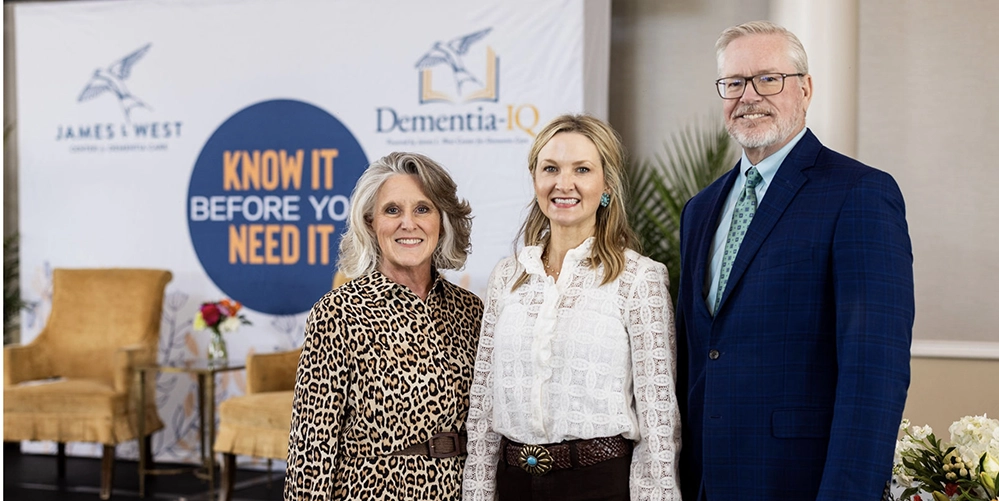
Amy Patyk, the West Center’s former Board Chair, closed the event by sharing her experience with dementia and inviting attendees to support the Center’s mission.
For 33 years, the James L. West Center for Dementia Care, a not-for-profit, has served families affected by dementia. Founded by Eunice West in honor of her late husband, James L. West, who died from dementia, the Center offers residential care, a Senior Day Program, short-term respite and rehabilitation, home care, and caregiver education. It was recently rebranded as Dementia-IQ Powered by James L. West.
You just read one of our favorite stories. There’s more where this came from — subscribe, and we’ll bring them to you every Tuesday.