Your Pet Is Protecting Your Brain. Here’s the Proof.
Originally published May 2022 | Updated June 2026


Looking for another reason to love your pet? Science says they’re good for your brain—and the evidence is stronger than ever.
Can pets boost our brain power? Yes, please!
Dr. Tiffany Braley, an associate professor of neurology at the University of Michigan, found evidence suggesting that pet ownership could help fight cognitive decline.
Dr. Braley’s study analyzed cognitive data from more than 1,300 adults participating in the Health and Retirement Study, a nationally representative study that tracks the lives of Americans age 50 and older.
The Science: 1.2 points better cognitive function
Evidently, when pet parents own fur babies for five years or more, their working verbal memory—such as memorizing word lists—improves significantly and delays cognitive decline by 1.2 points over the six-year study period compared with those without pets.
Ownership of dogs or cats was not required. Pet parents of rabbits, guinea pigs, birds, or other pets also had boosted brains!
Dogs and then cats, however, ranked as providing the greatest cognitive improvement.
Why pets help: Companionship fights loneliness
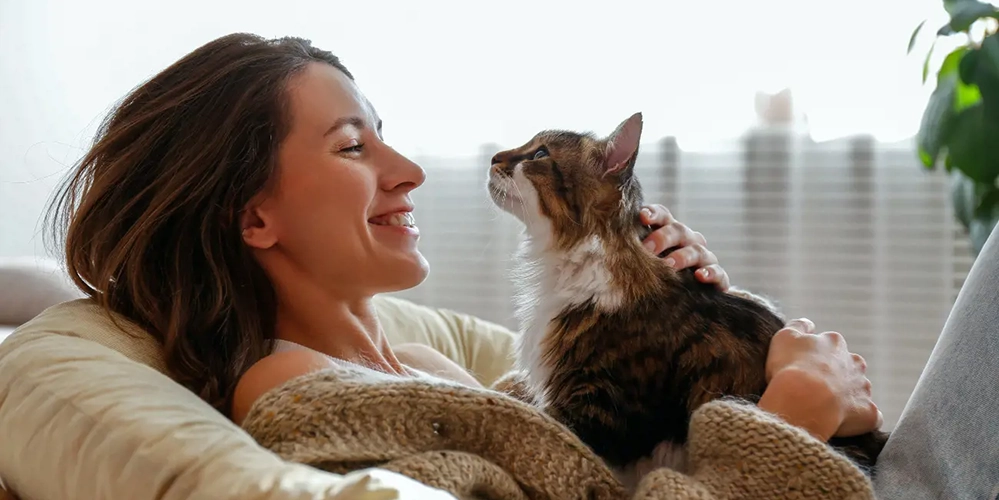
Naturally, the social companionship pets provide contributes a great deal to our well-being. People who live alone, without animal companionship, tend to be lonelier and often isolate more than their pet-owning counterparts, which can lead to depression. Many studies on dementia have shown that social interaction is key to improving brain health. For a heartwarming look at how cats provide this kind of healing companionship, see our reviews of We’ll Prescribe You a Cat and We’ll Prescribe You Another Cat.
Stress relief = Better brain health
Then there’s the fact that so many of us humans are challenged by daily stressors that negatively impact cortisol levels and blood pressure.
Our brain health and cognitive decline are absolutely related to this.

Happily, pets can bring enormous relief from stress just by stroking them, playing with them, walking them, and providing them with daily care. This gives us a sense of purpose, or, at the very least, a sense of duty.
“Cognitive engagement, socialization, physical activity, and having a sense of purpose can separately, or even more so in combination, address key modifiable risk factors for cognitive decline and Alzheimer’s disease dementia,” said Dr. Richard Isaacson, director of research at the Institute for Neurodegenerative Diseases in Florida.
The bottom line for pet owners at 50 and beyond
The happiness we experience with our furry and feathered friends does more than just elevate our mood and offer us unconditional love and affection.
Those of us older than 50 can now thank them for improving our cognition, too.
I must remember to thank my boys next time I grab the leash or even when I sit down for that cozy one-on-one with them.
Want more reasons to appreciate your pet? Discover how animals help us age well.
Share your pet story
How does your pet help keep you sharp? We’d love to hear about it! Share your story in the comments below or tell us: What’s the best thing your pet has taught you?
Your questions about pets and brain health, answered
How do pets help prevent cognitive decline?
Pets encourage the very things that protect the aging brain: social connection, daily physical activity, stress relief, and a sense of purpose. Each one targets a known risk factor for cognitive decline, and together they add up. Because the University of Michigan research followed adults 50 and older, the benefits of pets after 50 are especially well documented.
Which pets are best for brain health?
Dogs showed the strongest link to cognitive improvement, with cats ranking second. But you don’t need either. Owners of rabbits, guinea pigs, birds, and other animals also saw benefits. What seems to matter most is the bond and daily engagement, not the species.
How long do you need to own a pet to see cognitive benefits?
In the study, the clearest gains were seen among people who had owned a pet for five years or more. The benefits build over time, which is one more reason the case for pets after 50 only gets stronger the longer your companion is part of your life.
You just read one of our favorite stories. There’s more where this came from — subscribe, and we’ll bring them to you every Tuesday.