Partner Content | Del Webb
How baby chasers — a growing wave of grandparents — are redefining proximity, purpose, and an active life after the move
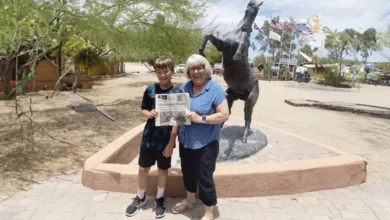
Donna Rubertone had no plans to leave Long Island, where she’d raised her family and spent her career. Then her first granddaughter, Olivia, was born in Plano, Texas, followed two years later by another granddaughter, Madison. “This makes no sense,” Rubertone recalls after a couple of years of flying back and forth every few months. “I am missing too much.” In September 2023, on a visit to see the family, her daughter-in-law suggested they tour a model home at Del Webb’s Trinity Falls master-planned community in McKinney, and she knew she’d found her new home. By February 2024 — in a single week — she’d retired, closed on her condo, and moved to Texas. “They say don’t follow your kids,” she says. “Well, I’m not. I’m following my grandkids. And it’s one of the best decisions I’ve ever made.”
She’s far from alone. Rubertone is part of a growing wave of grandparents now known as “baby chasers” who relocate, sometimes across the country, specifically to be near their grandchildren. According to Zonda Homes, roughly a quarter of baby boomers say they are likely to retire near their grandchildren — and AARP’s 2026 grandparents report found that more than one in four have already made a major life change to live closer to family, most relocating to the same community or region. What was once a quiet, occasional choice has become one of the defining forces reshaping American retirement and American real estate.
Why grandparents are moving now
The pandemic gets a good share of the credit, or the blame, depending on whom you ask. Years of missed birthdays, holidays celebrated over video calls, and a collective reckoning with how quickly time passes pushed many grandparents to stop postponing the move they’d always talked about “someday” making. Add to that a more mobile retiree population, more flexible remote-work arrangements among adult children, and a cultural shift toward blended, multigenerational support systems, and the result is a full-blown migration pattern.
Zonda’s research shows baby chasers gravitating heavily toward the Sun Belt. In the 2026 Baby Chaser Index, Orlando took the top spot from Austin, but Texas dominated overall, with four markets in the top 10 and three of those in the top 5 — Austin, Dallas and Houston, with San Antonio at No. 10.

Homes built for two generations at once
Builders and real estate analysts have taken notice. Homes that once catered almost exclusively to young families are increasingly being designed with an eye toward the grandparents moving in nearby, or even under the same roof: single-story layouts, wider doorways, curb-less showers, and flexible bonus rooms that can serve as a guest suite one month and a home office the next. Houzz named aging-in-place design its top home trend heading into 2026, a direct nod to just how many households are now planning for multiple generations at once.

What to think through before you move
But here’s what the trend stories often miss: moving near the grandkids isn’t only about diaper duty and pickup lines at the elementary school. Financial advisers who work with retirees are broadly supportive of the move and still urge people to think it through first. Evan Beach, founder of Exit 59 Advisory, told Kiplinger he considers it the right call about three-quarters of the time, and that the factors to weigh, in order, are “health, relationships and costs.”
The failure mode advisers see most often isn’t the one people expect. Grandchildren grow up; schedules fill with school and sports and friends. But the sharper risk is that the adult children move again. Charlotte financial planner Cheryl Sherrard has watched retirees relocate for young grandchildren only to have their kids transfer for work, leaving the grandparents in an unfamiliar city with no family in it. Following them a second time means paying the costs and the disruption all over again.
Which is why the smartest baby chasers aren’t just chasing a location — they’re looking for a life. They want the front-row seat for their grandchildren’s childhoods, but they also want their own friends, their own hobbies, their own sense of purpose and community once the car seat isn’t in the driveway anymore.
The math of moving near the grandkids deserves a look too. Selling a home, moving across the country, and buying into a new market can absorb a meaningful share of a fixed retirement income, and the cost of living in the new place may be higher or lower than the old one in ways that don’t show up until you’re there. The tax picture shifts as well. Rubertone traded New York for a state with no income tax, but Texas funds itself through property taxes that run well above the national average — a trade that favors some households and not others. Every state does it differently. Worth running with an adviser before the moving truck is booked, not after.
Active adult communities: proximity and a life of your own
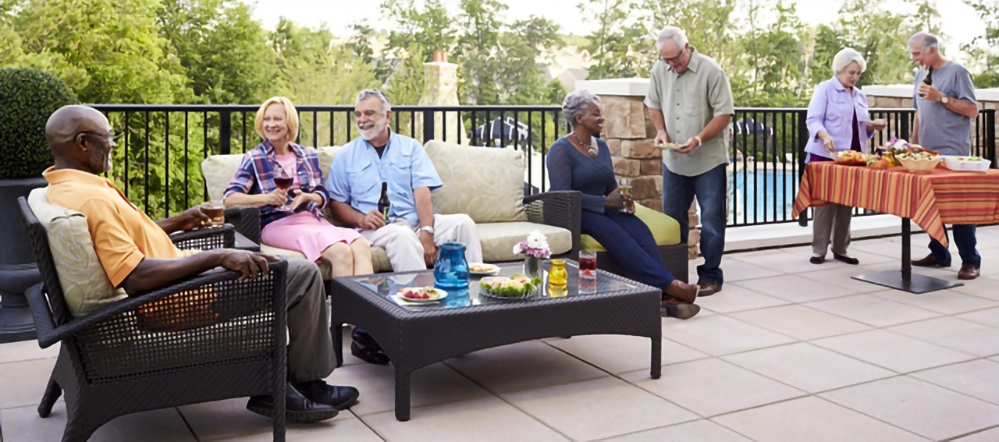
That’s precisely the gap that active adult communities like Del Webb have built themselves around filling. With more than fifty communities across the country — including several in the very markets topping the Baby Chaser Index, such as the Dallas-Fort Worth area — Del Webb has spent decades refining a model that lets grandparents have it both ways: real proximity to the people they love, and a genuinely active, resort-style lifestyle designed around their own stage of life. Pickleball courts, a clubhouse, walking trails and a full calendar of clubs and classes mean residents aren’t rebuilding a friend group from scratch, and single-story, low-maintenance homes trade yard work and stairs for time.
For grandparents like Donna Pagel, that balance has made all the difference. A retired teacher who moved from Conroe, Texas, to Del Webb’s Legacy Hills in Celina to be near her three-and-a-half-year-old granddaughter, Hagen, Donna is just twenty minutes from her son’s home in Frisco. It’s close enough that “Honey Camp,” as her granddaughter calls their visits, happens whenever the mood strikes. But her days aren’t only built around her granddaughter; they’re built around a community she describes as a second family, one where neighbors trade home-cooked dinners and look out for each other without being asked. “I think that’s the whole Del Webb concept,” she says. “Everybody’s in the same boat, at the same age. We forget things and just laugh about it and go on.”
Crucially, that lifestyle doesn’t compete with grandkid time, it complements it. A grandparent can host a sleepover on Friday, hand the kids back to mom and dad Saturday morning and be on the pickleball court by ten. They can watch a dance recital on a Tuesday and still make a book club that night. Being near family and having a full, independent life were once treated as competing priorities for retirees. Active adult communities like Del Webb are built on the premise that they shouldn’t be.
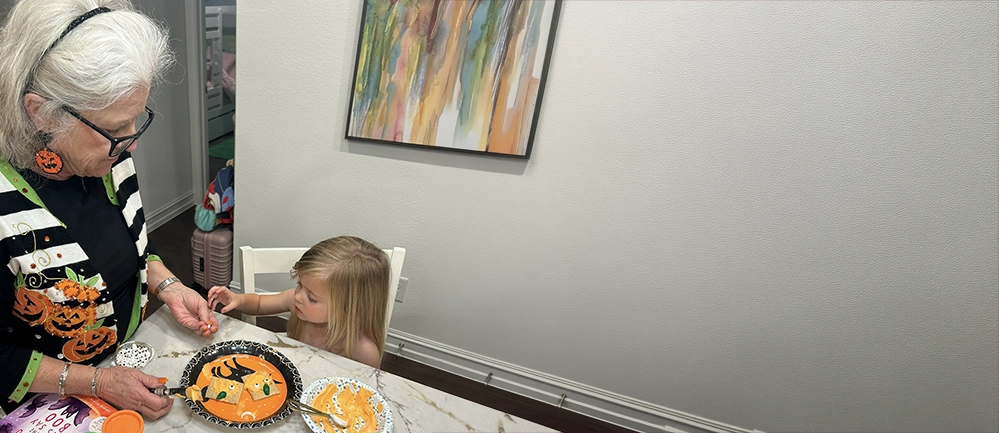
Ask Pagel what her granddaughter loves most about visiting, and the answer comes without hesitation: the community pool. “This is my favorite place,” Hagen tells her. Pagel’s favorite place? Wherever Hagen is.
As the baby chaser trend continues to reshape where and how retirees choose to live, that distinction may be the real story: not just where grandparents are going, but how they’re managing to arrive there without losing themselves in the process.
What baby chasers ask most
What is a baby chaser?
Baby chasers are grandparents who relocate, sometimes across the country, specifically to live near their grandchildren. The term comes from Zonda’s Baby Chaser Index, which tracks where baby boomer and millennial migration overlap.
How many grandparents actually move to be closer to family?
More than one in four. AARP’s 2026 grandparents report found that 28 percent have made a major life change to live closer to family, most relocating to the same community or region. Separately, Zonda found about a quarter of baby boomers say they are likely to retire near their grandchildren.
Where are baby chasers moving?
Overwhelmingly to the Sun Belt. Orlando ranked No. 1 in Zonda’s 2026 Baby Chaser Index, with Texas claiming four of the top 10 markets — Austin, Dallas and Houston in the top 5, and San Antonio at No. 10.
What should you think about before moving near the grandkids?
Advisers put health, relationships and costs in that order. The two risks people underestimate are that grandchildren grow up and their schedules fill, and that adult children may relocate again for work — leaving grandparents in an unfamiliar city with no family in it. Selling, moving and buying into a new market also absorbs a real share of a fixed retirement income, and the tax picture can change substantially from one state to another.
What is an active adult community?
An age-restricted, master-planned neighborhood built for adults 55 and older, combining low-maintenance single-story homes with shared amenities — clubhouses, pools, pickleball courts, walking trails and organized clubs. Del Webb pioneered the model with the first Sun City in 1960 and now operates more than fifty communities nationwide.
Read next: Baby Boomers Trade Inheritance for Unforgettable Family Trips
You just read one of our favorite stories. There’s more where this came from — subscribe, and we’ll bring them to you every Tuesday.